Benchmarking Meta Ads MCP Servers on Campaign Creation Speed and Optimization Depth
Official and third-party Meta Ads MCP servers trade speed for safeguards.
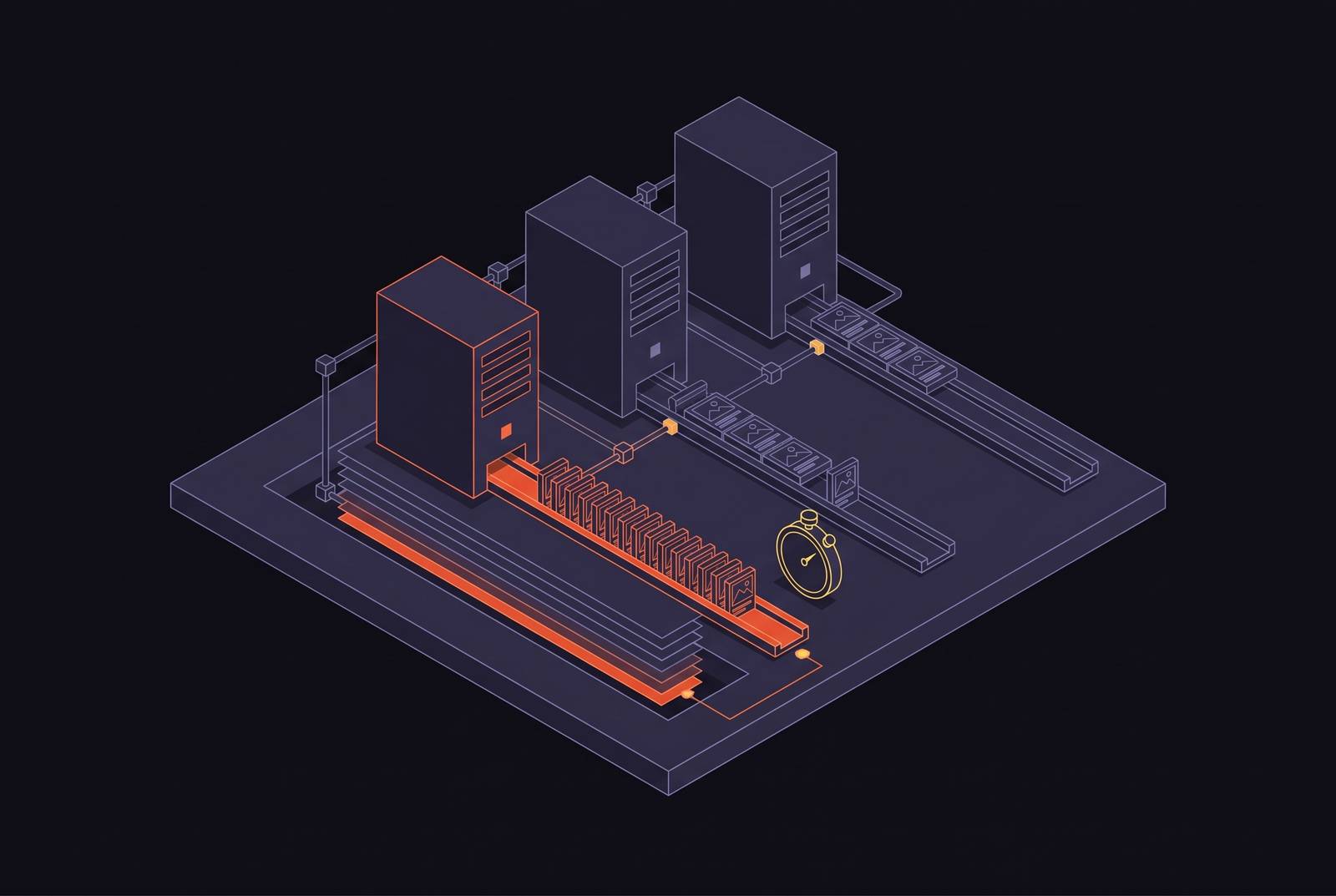
Meta Ads MCP servers connect AI assistants to tools for managing social media ad campaigns. The buying decision turns on campaign creation speed and optimization depth. Meta’s official server works well for reporting and one-off edits, while third-party tools also handle bulk launches, more kinds of diagnosis, and cross-platform work. How useful those gains are depends on the approval gates and safeguards in place for the account.
Why Meta Ads MCP servers are worth benchmarking now
An MCP server exposes ad-platform API calls as structured, permission-scoped tools that an AI client such as Claude, ChatGPT, Cursor, or Perplexity can invoke from natural language, handling the calls rather than making the agent construct them from scratch. The choices now include first-party tools, API wrappers, analytics products, and bulk-launch services. Those are different products with different strengths. Comparing them as interchangeable connectors hides the differences that shape daily work.
Campaign creation speed measures the path from a prompt to a live or paused campaign structure, including whether the server handles bulk volume. Optimization depth measures how much access a server gives to performance signals, campaign controls, and creative tools that help make changes that matter. The two do not rise together. A bulk server can be fast without doing much diagnosis, while a tool with deeper optimization may wait for approval before it changes anything.
What does the official Meta MCP cover, and where does it stop?
Meta’s official MCP is a reasonable baseline for reporting and one-off edits on a single account. It is free, first-party, and covers all reporting categories. New ads default to paused status. Since July 16, 2026, business admins can also choose which actions to block and set caps on budgets in Meta Business Suite under Settings > Integrations > Ads MCP server. These controls give the official option a native safeguard layer without requiring a separate service.
Its launch model is more restrictive than its reporting coverage. The official server creates one object per call, whether that object is a campaign, an ad set, or an ad. There is no batch tool. A large launch therefore becomes a supervised chain of individual creations. It also has no pre-flight validation or server-side spend guardrails other than the admin rules added in July.
Meta must enable each ad account through a phased rollout, with no self-serve toggle. An agency cannot assume that access for one client extends to the rest of its roster. For someone connecting an advertising account to an AI assistant, account eligibility is therefore a prerequisite to using the official route. Its fit depends on both the work required and whether Meta has enabled the account.
How campaign creation speed actually differs across servers
API wrappers expose existing Marketing API calls tool by tool, leaving the agent to work out how settings fit together for a particular launch. The official server belongs to this category. Bulk-launch servers are built to handle large amounts of work at once. That structural difference predicts launch speed better than a long tool list, because a job handled as one request by a bulk server can become dozens of supervised calls through a wrapper.
Adbloop claims creation of more than 150 campaigns in under two minutes. It pairs that claim with validation against 108 documented Meta API fixes and server-side spend caps enforced before anything goes live. Every campaign lands paused. The figure describes bulk creation subject to review before publication, and it represents a vendor-specific claim. Even with that distinction, it gives a concrete example of the workload bulk tools target.
Ads Uploader is for media buyers who launch ads in bulk, with a flat monthly fee and no limit on the number of ad accounts. Its launches wait in an Agent Inbox for approval before going live. Markifact supports campaign creation from natural language, including budgets, targeting, placements, schedules, and optimization settings, but stops all write operations for approval. Approval adds a deliberate stopping point. To compare speed, the time spent preparing the campaign structure needs to be kept separate from the time spent carrying out approved changes.
Product origins also explain why servers differ. Windsor.ai and GoMarble began as analytics products and added MCP, while AdStellar began as an agentic AI media buyer focused on creative and launch work before adding MCP. These starting points shape what the connection is built to do. Launch throughput is not the primary purpose of an analytics connector, and MCP tool count alone says little about the workflow behind it. As creative libraries grow, it matters more whether a server handles work in bulk or one call at a time.
The three ceiling layers that limit optimization depth regardless of server
The first limit is Meta’s algorithmic layer. MCP servers can change campaign structure by setting budgets, targeting parameters, placement settings, and the choice of bid strategy. Advantage+ delivery logic, internal audience expansion decisions, and bidding algorithm internals stay inside Meta’s own systems. An agent can select a budget and bid strategy type, but it cannot dictate how Meta routes delivery within those constraints.
The second limit is partial blindness to creative. The connector exposes text fields such as headline, primary text, and description, and it can list existing media assets. The protocol itself does not supply visual understanding. Rising frequency and falling CTR can reveal a fatigue signal, but those readings do not establish whether the image, video hook, or mobile rendering caused it. What a product adds through its creative interface needs to be kept separate from what raw API access can show.
The third limit comes from rate limits and edit frequency. Meta’s significant-edit policy means frequent live budget changes can reset learning signals and degrade performance. More intervention can make the result worse. An agent that keeps changing settings is not necessarily optimizing more deeply than one that identifies a problem and waits.
What optimization depth looks like when servers work within those ceilings
Markifact, an approved Meta tech provider, can look beyond top-line campaign metrics to help find what is wrong. It can break down data by placement, device, age, and gender across more than one ad account. It also tracks pixel and Conversions API health, including event coverage and match quality, and flags high-CPA ad sets to check for creative-fatigue. That adds context to a performance reading. With approval, it can then shift budgets to winners or pause underperformers, without acting right away on every weak metric.
Its hourly alerts and scheduled Google Sheets exports continue after the chat session ends. Meta retains exclusive control over its internal optimization logic.
Approval architecture is itself a depth feature because it exposes the proposed change and its reasoning before execution. AdKit defaults every agent change to a draft requiring approval before it goes live, with the option to loosen that restriction as trust grows. Markifact stops all writes for approval. Its example creative-fatigue session in Claude shows the agent flagging tired ads and waiting for sign-off before pausing them.
AdKit covers nine platforms from one connection, Get MCP Ads covers Meta and 15 more ad and analytics platforms, and Markifact covers 14 ad platforms plus multiple analytics platforms. The official server covers only Meta. An agent that can compare Meta with Google, TikTok, LinkedIn, Reddit, Pinterest, and analytics data has a wider basis for allocation decisions.
The account-ban risk that changes the speed-depth calculus
Misconfigured automation can put an ad account at risk of permanent bans, so throughput cannot be judged apart from safeguards. The risks documented in 2026 include API calls made so quickly that they trigger Meta’s 613 error and AI-generated ads that go live without the disclosure label required since June 2026. A fast launch workflow does not establish that either has been addressed, and a spend cap is not a substitute for disclosure compliance.
Adbloop enforces spend caps server-side rather than relying on a prompt, and its validation layer catches policy-adjacent errors before they reach the API. The official server’s July admin rules provide native controls over permitted actions and budgets. Paused creation offers another useful checkpoint. Adbloop, Get MCP Ads, the official server, AdKit, and Markifact create campaigns paused by default, reducing the chance of spend starting before a human reviews the structure. Automation carries residual risks beyond those addressed by these controls.
A subtler problem arises when the performance signal is incomplete. An agent may interpret a high CPA as grounds to pause a campaign when the reading reflects delayed attribution, an unfinished conversion window, an intentional data-gathering phase, or temporary promotional pricing. The number alone cannot explain the cause. Without explicit context, the agent can sound certain while acting on the wrong interpretation. Access to more metrics alone cannot make the agent’s confidence match what it knows.
Approval-before-execution systems pause changes while allowing diagnosis to proceed. They slow work down to help avoid errors that could leave someone having to recover things by hand or get an account reinstated. The practitioner-level mitigation is to specify the date range, metric name, campaign ID, and attribution window in every query. Those details tie the answer to what was measured. They also help the person approving a change judge whether it fits what is happening in the campaign.
Matching server choice to workload: a practical decision framework
For reporting and one-off edits on a single Meta account, the official server is the best fit, provided the account has access. Its reporting coverage and basic admin guardrails meet that workload without an additional product. There is little reason to add complexity. At this level, a third-party server does not add enough value to justify extra cost or setup merely because it offers more tools.
For media buyers launching at volume across client accounts, bulk upload servers are the appropriate category. Ads Uploader, AdManage, Koast, and Adbloop belong in that comparison. The decisive criteria are bulk creation, account coverage, validation, and the approval path before launch. Published speed claims need that context. A short creation time is useful only if the resulting workflow also handles the roster of accounts and the safety requirements the buyer actually has.
For teams seeking deeper optimization across channels, diagnostic reach and shared performance context take priority over launch throughput. Markifact fits work involving detailed breakdowns, conversion-signal health, and approved changes. These are different forms of depth. When the decision requires comparing Meta with Google or LinkedIn, a Meta-only connection cannot supply the full basis for that choice.
For teams or startups that want automation without maintaining a stack of server configurations, a unified platform is a different route. Combining competitor ad tracking, creative analytics, multi-channel campaign creation, and performance monitoring in one interface removes the overhead of separate connections for each function. AI agents with brand, market, and performance context support that model.