Facebook Ads Reporting Tools Agencies Use and Their Limitations
Agencies must layer multiple tools to get trustworthy Facebook data and act on it.

Facebook Ads reporting tools each do part of the work an agency needs, but each leaves some work for another tool. The team needs a combination that gives it numbers it can trust, shows when things fail, and lets people act without adding more work.
Why Facebook Ads reporting has split into four separate tool categories
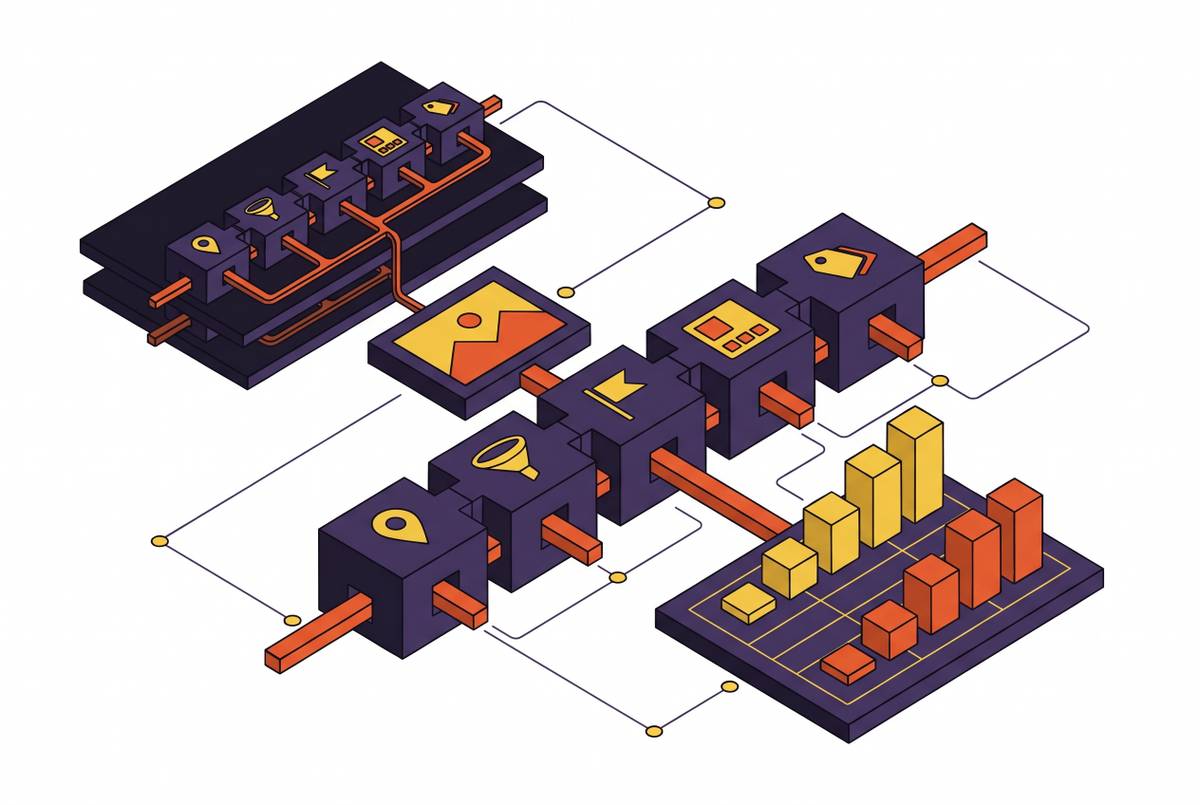
An agency reporting stack has four login screens, four billing lines, and four refresh cycles. The four categories behind that stack are native platform reporting, data connectors, cross-channel dashboards, and attribution engines. Each exists because the layer before it leaves something unresolved. This is not simply a case of agencies buying too much software. The separation starts inside Meta’s own ecosystem.
Meta divides its surfaces across Page Insights, Meta Business Suite, and Ads Manager. Meta Business Suite’s Insights tab offers a combined view of organic and paid performance, but that does not make it a complete agency reporting system. Ads Manager has paid delivery data, but it has no agency branding, polished PDF delivery, or white-label option. Client communication therefore needs another layer.
Measurement creates a separate gap because Meta reports within its own ecosystem and attribution windows. To compare returns across channels, teams need independent measurement as well as Meta’s numbers. Getting those numbers into an external BI tool or spreadsheet also requires a pipeline that Meta does not supply natively for free.
What Meta's native Ads Manager actually reports and where it stops
Ads Manager is the irreplaceable source of truth for delivery data. It reports impressions, clicks, CPC, frequency, and placement breakdowns directly from the source. Auction diagnostics, which include creative fatigue signals, help explain what is going on inside the account. These are useful operational facts, but they do not establish whether Facebook spend is generating profitable growth.
The first boundary is incrementality, meaning revenue that would not have happened without the ads. Meta attributes conversions within its window without checking whether the buyer was already going to buy. It also cannot compare Facebook against Google, TikTok, or YouTube on the same measurement basis. Nor does it show where the last increment of Meta spend produced less revenue than shifting that money elsewhere would have.
The reporting window creates another blind spot. Ads Manager caps at a 7-day click / 1-day view window, and 70% of Facebook clicks do not convert within that window. Prospecting campaigns and high-ticket or B2B deals can therefore appear unproductive while revenue arrives later. Conversions lost to consent banners and iOS ATT leave further gaps, making reported CPA higher than true CPA. Teams working at agency scale also have to deal with a slow interface, scheduled reports that sometimes fail without warning, and the need to keep switching tabs between accounts.
How Meta's 2026 attribution changes broke month-over-month comparisons across every tool
Meta’s January 2026 deprecation of the 7-day view and 28-day view attribution windows changed what the conversions column meant. Comparisons of results from before and after that rollout no longer measured the same thing on both sides. Reported conversions dropped across many accounts because the definition changed. B2B, luxury, high-ticket e-commerce, and real estate were worst affected because meaningful shares of their conversions had fallen within the removed multi-week windows.
From March 2026, Meta again changed what it counted, as click-through attribution began counting only link clicks. Other interactions moved into a separate “engage-through conversions” column. That lowered reported click-through numbers without requiring any change in actual sales. A report could retain the same layout while the meaning of its figures changed underneath it.
The API behavior made this particularly hard to spot. Requests for deprecated windows returned empty data rather than an error message, leaving tools that still referenced them to display blanks or zeros without warning. Those outputs fed budget questions, blame directed at agencies, and pauses to working campaigns. The failure was not confined to one reporting product because every downstream tool depended on understanding the source change.
Meta’s concurrent “Andromeda” algorithm change also favored fewer campaigns with broader targeting and penalized fragmented account structures. Agencies whose reports were organized around older campaign architectures were therefore reading results from structures Meta’s machine learning was deprioritizing. Both the measurement definition and the structure being measured had shifted.
Where data connectors and Looker Studio pipelines introduce their own failure points
Data connectors transport data while leaving its meaning unresolved. Supermetrics pulls Facebook ad data into destinations including Google Sheets, Looker Studio, Power BI, Excel, and BigQuery. That flexibility makes it a good fit for data-native teams building custom workflows. The trade-off is that the agency builds the reports from scratch rather than starting with pre-built Facebook Ads templates. Useful output depends on spreadsheet or BI skills that not every team member has.
Supermetrics pricing starts from €39/month, with agency plans at a higher tier, while the destination can add its own cost. Looker Studio does not natively connect to Meta Ads, so it requires a third-party connector. The setup may look simple, but it adds another bill to keep paying and another place where things can go wrong.
That extra layer does not always make failures more visible. Connector breakages can leave scheduled reports pulling stale or incomplete data without an alert. This allows failures to go unnoticed further from the source, where the team is looking at a report. Even when a pipeline works well, the numbers it passes through are still Meta-reported metrics. Independent measurement remains necessary to establish cross-channel ROAS and incremental business impact, so connectors relocate fragmentation.
What white-label dashboard platforms do well and where their reporting depth ends
White-label dashboards address the client communication work that Ads Manager leaves unfinished. Whatagraph, DashThis, Swydo, and Reporting Ninja occupy this presentation layer. These tools have branded reports, scheduled delivery, pre-built Facebook Ads templates, and client portals with role-based access. Multi-channel reporting can bring Google Ads, SEO, social, and Meta data into one report. These features make reporting easier to deliver and easier for clients to use without giving them Ads Manager access.
Whatagraph emphasizes white-labeling and automated delivery, though its base-plan cost and credit-based pricing can become constraints as client counts grow. DashThis is positioned for client reporting, with paid pricing after a free trial. Reporting Ninja provides full feature access at every tier, including automation and white-labeling, but has no mobile app. It also offers a 15-day free trial with no credit card required.
Swydo addresses a more basic problem through its Data Health Check Alerts system, which notifies teams when data connections break. Swydo also emphasizes API reliability as Meta’s Advantage+ migration and new attribution windows require integration updates. If a tool failed to surface Meta’s January 2026 definition change, its polished client report could still deliver a broken comparison.
Why attribution engines don't fully replace dashboard tools but create their own operational overhead
Attribution platforms such as Triple Whale and SegmentStream can answer questions that tools for presenting reports cannot. Multi-touch models can give prospecting campaigns credit for warming users before a Google brand search closes the sale. Cross-channel ROAS puts Facebook, Google, TikTok, and YouTube on the same measurement basis. Predictive modeling and first-party data integration can also account for conversions beyond Meta’s 7-day window. These methods reach past platform reporting, although attribution credit alone is not proof of causation.
Incrementality measurement adds that separate test through geo experiments that examine Facebook’s causal contribution to revenue. SegmentStream combines cross-channel attribution, incrementality, and marginal returns measurement. It also sends predictive conversion signals back to Meta through CAPI to improve bidding. Its MCP Server access lets AI assistants query attribution-adjusted ROAS in natural language. That makes the measurement easier to access, but access is not the same as campaign execution.
Teams still have to make changes by hand in each ad platform, and attribution systems add work to keep them running well and deal with their complexity. The Conversions API is optional at the platform-wide level but strongly recommended and effectively essential in practice for agencies trying to maintain attribution accuracy, with implementation and ongoing maintenance adding work outside most reporting subscriptions. Attribution engines therefore provide the deepest partial answer alongside client dashboards and campaign tools. Better measurement still leaves a handoff between understanding a result and changing the account.
How AdEspresso and campaign management tools blur the line between reporting and execution
Campaign management tools shorten that handoff by putting reporting and action closer together. AdEspresso serves small marketing teams and ad testing, with a base plan from $49/month after a free trial. Its reporting is tied to the campaign variants a team is testing.
Birch illustrates the broader consolidation argument through its place in the reporting-plus-automation category. Here, the value is not simply another way to view performance, but rules that connect performance changes to campaign management. Tools in this category have rules that pause ads, adjust budgets, scale campaigns, or fire alerts. Those capabilities reduce the need to watch a dashboard manually before taking the next step.
The remaining limit is the signal driving the rule. Tools that combine reporting and automation still operate on Meta-reported metrics, so incorrect attribution can trigger action on the wrong basis. Faster execution reduces delay, but the quality of the decision still depends on the quality of the input.
What a genuinely unified platform needs to do that the current tool categories individually cannot
A genuinely unified platform needs to connect competitor intelligence, creative analytics, campaign execution, performance monitoring, and client reporting in one environment. The platform needs to remove the handoffs that separate finding a problem from doing something useful about it. Subscription overhead is only part of fragmentation’s cost. Work is also delayed as it moves between tools and people.
That connection needs to start before launch. Market research and competitor ad tracking can inform campaigns before budget is spent, while AI-generated creative briefs, audience targeting, copy variants, and automated resizing bring creative work into the same environment as reporting. AI agents with persistent context can then use knowledge of the brand, market, and account’s performance patterns to monitor, flag, and act. The aim is to avoid waiting for someone to notice an anomaly on a dashboard.
Meta’s Ads AI Connectors, launched in open beta in late April 2026, support this direction by opening a tool-calling surface for AI agents. Meta also introduced an Ads CLI for developers, giving them access beyond a traditional developer API that requires App Review. That infrastructure makes agent-driven workflows more practical, but it does not make unrestricted autonomy the goal. Governed autonomy requires human review before significant budget moves, holdout segments to validate lift claims independently, and write-capable integrations.
A platform needs to pass three tests: fewer tools needed, earlier warnings before problems cost the client money, and a way to act without switching environments. A platform that passes only the first test may just hide the same gaps behind one interface. One that meets all three still needs sound measurement and human control. That is the standard that turns a collection of reporting features into a useful agency workflow.